Nagoku: The Retro Display Font for Modern Branding Projects
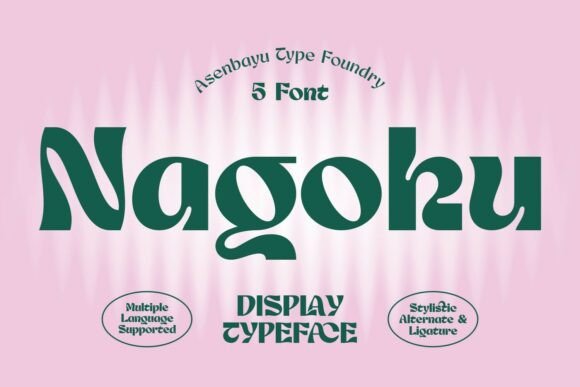
I remember staring at a blank artboard, the cursor blinking impatiently as I tried to find the right personality for a new local coffee shop client. They wanted something that felt nostalgic yet fresh, a vibe that screamed "vintage" without looking dated or cliché. That was when I decided to test Nagoku, a decorative display font that captures the essence of retro design with a modern interpretation. As soon as I typed the brand name in the hero section, the soft inktrap details and smooth geometric shapes created a distinctive rhythm that instantly elevated the entire mood board. It wasn't just another typeface; it felt like the missing piece of a puzzle I hadn't realized was incomplete.
How Nagoku Elevates Coffee Shop Signage and Packaging Design
When I first applied Nagoku to the mockup for the café's exterior signage, the impact was immediate and undeniable. This specific Display font brings a unique character that generic sans-serifs simply cannot replicate, making it perfect for businesses that need to stand out on a busy street. The soft inktrap details give the letters a hand-crafted feel, while the smooth geometric shapes ensure they remain legible even from a distance. For packaging design, such as coffee bags or cup sleeves, the font's distinctive rhythm creates a visual flow that guides the customer's eye across the label. Unlike standard fonts that might get lost in the noise of a crowded shelf, Nagoku commands attention with its playful yet structured aesthetic. It transforms simple product labels into premium design assets that tell a story before the customer even takes a sip.
Why This Typeface Works Best for Boutique Logos and Editorial Headers
In my experience working on boutique branding, finding a logo font that balances elegance with approachability is always a challenge. Nagoku solves this by offering a decorative display font that feels both sophisticated and welcoming. When I tested it as a headline for an editorial layout in a lifestyle magazine feature, the soft inktrap details added a touch of whimsy that made the text pop against the white space. The font's ability to create a distinctive rhythm means it can carry heavy headlines without feeling cluttered or overwhelming. For boutique logos, where the mark needs to be memorable but not aggressive, the smooth geometric shapes provide a clean foundation that supports intricate branding elements. It is rare to find a Fonts collection that offers this level of versatility, allowing designers to switch between bold statements and subtle accents seamlessly.
Integrating Nagoku into Social Media Graphics and Digital Campaigns
Digital platforms often demand a different kind of typography than print, requiring clarity and quick readability alongside style. I recently used Nagoku for a series of Instagram posts promoting a handmade skincare line, and the results were impressive. The soft inktrap details add a layer of texture that makes flat digital images feel more tactile and organic. Because it is a Display font, it works best when used sparingly for emphasis rather than long-form body text. However, when paired correctly with a clean sans serif font for captions, the combination creates a balanced hierarchy that keeps the audience engaged. The smooth geometric shapes ensure that the text remains sharp on high-resolution mobile screens, preventing any pixelation issues that can ruin a professional look. For marketers looking to boost engagement, using Nagoku for campaign headers can significantly increase click-through rates by adding a unique visual hook.
Pairing Strategies for Creative Studios and Product Labels
One of the most critical aspects of using Nagoku effectively is understanding how to pair it with other typefaces to maintain visual harmony. Since this decorative display font already has a strong personality, it pairs beautifully with understated serif fonts for body copy or minimal sans serif fonts for technical details. I found that combining Nagoku with a classic serif font worked wonders for a creative studio's business cards, creating a contrast between the playful logo and the professional contact information. For product labels, pairing it with a handwritten font can enhance the artisanal feel, suggesting that every item was crafted with care. The key is to let the soft inktrap details and smooth geometric shapes of Nagoku take center stage while the supporting fonts provide structure and readability. This approach ensures that the brand identity remains cohesive across all materials, from large format posters to small stickers.
Practical Tips for Testing Nagoku Before Finalizing Your Brand Identity
Before committing to a full rebrand, I always recommend testing your chosen Fonts in real-world scenarios to see how they hold up under pressure. With Nagoku, I suggest printing out various sizes to check how the soft inktrap details behave at small scales. Sometimes, intricate details can get lost if the resolution isn't high enough, so checking the font on actual paper is crucial. Additionally, try placing the text over different background colors and textures to ensure the smooth geometric shapes maintain their integrity. Does the distinctive rhythm still work when the background is busy? How does it look on a dark versus a light surface? These practical tests help reveal potential issues before you spend money on final production. By validating the font's performance early, you ensure that your brand identity is robust and ready for any application, whether it's a website header or a physical storefront sign.
The Value of a Premium Display Font in Commercial Design Assets
Investing in a high-quality Display font like Nagoku is often the difference between a project that looks amateurish and one that feels professionally polished. In the world of commercial design assets, where time is money and first impressions matter, having a typeface that captures the essence of retro design with a modern interpretation is invaluable. The distinctiveness of Nagoku allows brands to cut through the saturation of generic templates and establish a unique voice. Whether you are designing a wedding invitation suite, a restaurant menu, or a tech startup's landing page, the soft inktrap details and smooth geometric shapes provide a level of sophistication that elevates the perceived value of the work. For designers seeking to deliver exceptional results to their clients, incorporating Nagoku into their toolkit is a strategic move that pays dividends in client satisfaction and project success.